


Beneficial Microbe
It is used in agriculture, aquaculture, and hydroponics to fight root pathogens such as Ralstonia solanacearum, Pythium, Rhizoctonia solani ,Alternaria tenuissima and Fusarium as well improve root tolerance to salt stress. They are considered a growth-promoting rhizobacteria and have the ability to quickly colonize roots.
Bacillus amyloliquefaciens is considered a root-colonizing biocontrol bacterium, and is used to fight some plant root pathogens in agriculture, aquaculture, and hydroponics. It has been shown to provide benefits to plants in both soil and hydroponic applications. It takes action against bacterial and fungi pathogens, and may prevent infection though competitive exclusion or out-competing the unwanted pathogen. It has been shown to be effective against several root pathogens that hurt agricultural yields in soil and hydroponics, such as Ralstonia solanacearum in cannabis sativa-hemp, tomatoes, Rhizoctonia solani in lettuce, Pythium in cannabis sativa-hemp & tomatoes,Alternaria tenuissima in English ivy and Fusarium in bananas and cucumbers. It also appears to improve root tolerance against abiotic stress, allowing plants such as maize to tolerate high salt concentrations in hydroponic applications, while also reducing salt concentrations in the plant tissue.
Bacillus amyloliquefaciens is a species of bacterium in the genus Bacillus that is the source of the BamHI restriction enzyme. It also synthesizes a natural antibiotic protein barnase, a widely studied ribonuclease that forms a famously tight complex with its intracellular inhibitor barstar, and plantazolicin, an antibiotic with selective activity against Bacillus anthracis
Alpha amylase from B. amyloliquefaciens is often used in starch hydrolysis. It is also a source of subtilisin, which catalyzes the breakdown of proteins in a similar way to trypsin.
See our test of ORGANIC (biological) vs CHEMICAL Fungicides here.
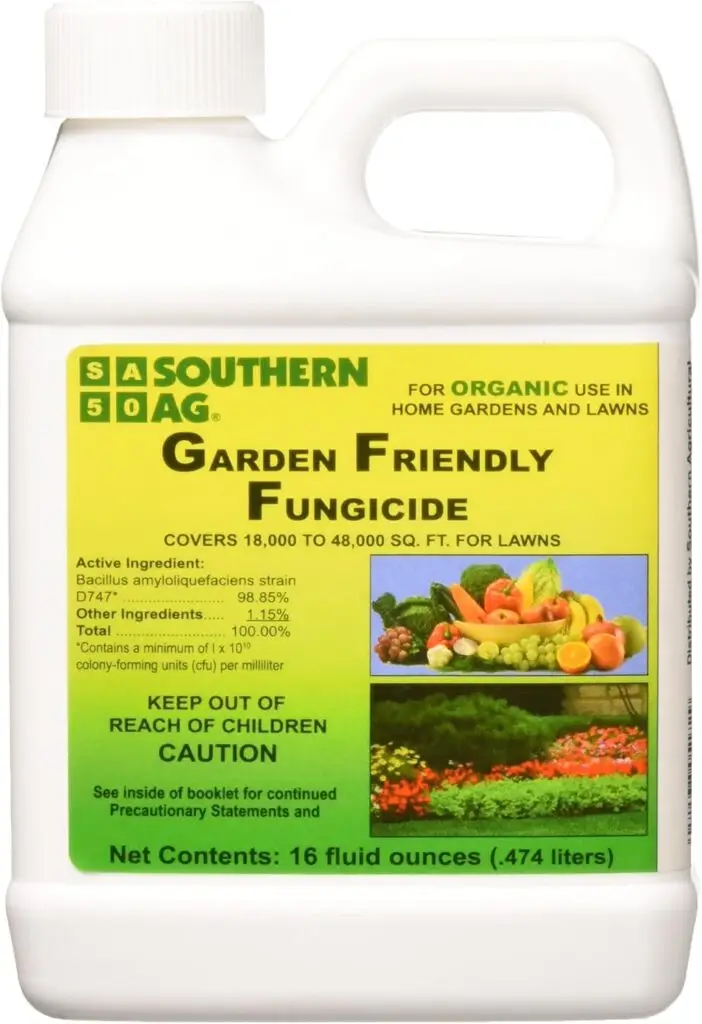
Southern Ag Garden Friendly Biological Fungicide,16oz