

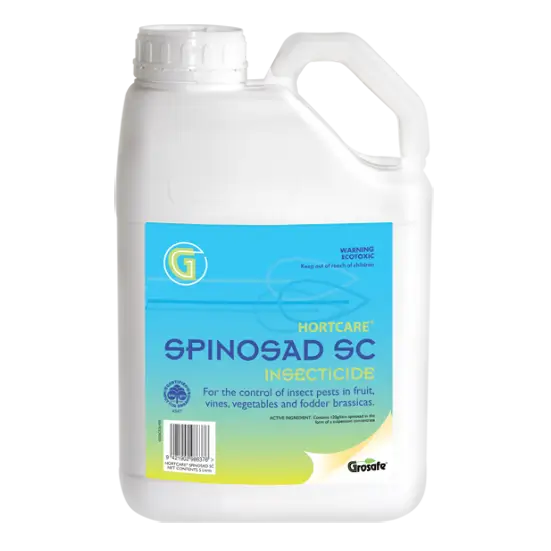


How It Works:
Spinosad acts primarily as both a contact and stomach poison. Insects that ingest it (by feeding on treated foliage) or come into direct contact absorb it, which overstimulates their nervous system. It targets nicotinic acetylcholine receptors in a unique way, causing uncontrolled muscle contractions, tremors, paralysis, and death—usually within 1-2 days. Feeding often stops within minutes to hours.
- Caterpillars (e.g., loopers, armyworms, tent caterpillars, bagworms, hornworms)
- Thrips
- Leafminers
- Colorado potato beetles
- Spider mites (in some cases)
- Fire ants
- Fruit flies and mosquitos
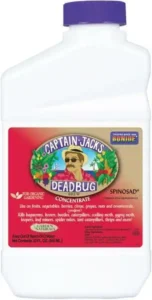 Spinosad Can Be Found Under Many Names Including:
Captain Jack’s Deadbug Brew, Monterey Garden Insect Spray, Fertilome Spinosad, or Entrust (for commercial/organic use).
Safety And Environmental Considerations
- For humans and mammals: Low toxicity overall—it’s considered “slightly toxic” in acute exposure. Brief contact may cause mild eye irritation; always follow label instructions, wear PPE if mixing/applying, and wash yourself thoroughly after handling.
- Beneficial insects: It’s relatively selective and spares many predators (e.g., ladybugs, lacewings, parasitic wasps) once dried, but it’s highly toxic to bees and other pollinators if applied to blooming plants or when they’re foraging. Avoid spraying during bloom, apply in evening/early morning, and don’t apply if bees are active for ~3 hours post-treatment if you want bees around.
- Other wildlife: Low risk to birds and fish when used properly, but toxic to aquatic invertebrates—avoid runoff into water.
- Persistence: Lasts 1-4 weeks on foliage once dry (longer than Bacillus Thuringiensis), but breaks down in sunlight/soil relatively quickly