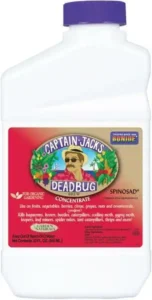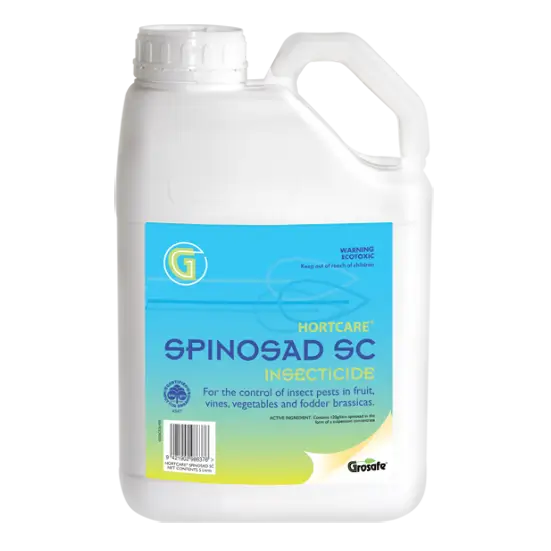

What Is Spinosad:

Spinosad is an organic insecticide that is derived from the soil bacterium Saccharopolyspora spinosa through fermentation.

It’s a natural substance (a mixture of spinosyn A and spinosyn D) that’s been registered by the EPA since 1997 and is approved for organic agriculture by the USDA National Organic Program.


A Cool Story: How Spinosad Was Found

In the early 1980s, a scientist from Eli Lilly was vacationing in the Virgin Islands and collected a soil sample from the floor of an abandoned rum distillery. Back in the lab, this routine sample was screened for microbes with potential insect-killing properties. From it, researchers isolated a new bacterium they named Saccharopolyspora spinosa. When fermented, this actinomycete produced a family of unique compounds called spinosyns—rare macrolides that showed remarkable activity against many insect pests.

The most potent ones, spinosyn A and D, were combined into a product called Spinosad (roughly 85% A and 15% D). It offered highly selective insect control with low toxicity to mammals, birds, and beneficial insects, making it a breakthrough natural insecticide. First registered in the late 1990s, Spinosad launched an entire new class of biopesticides and remains a favorite in organic and integrated pest management programs today—all thanks to a bit of serendipity from an old rum factory floor.

How It Works:

Spinosad acts primarily as both a contact and stomach poison. Insects that ingest it (by feeding on treated foliage) or come into direct contact absorb it, which overstimulates their nervous system. It targets nicotinic acetylcholine receptors in a unique way, causing uncontrolled muscle contractions, tremors, paralysis, and death—usually within 1-2 days. Feeding often stops within minutes to hours.

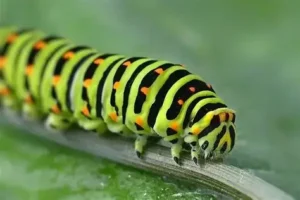
  • Caterpillars (e.g., loopers, armyworms, tent caterpillars, bagworms, hornworms)
  • Thrips
  • Leafminers
  • Colorado potato beetles
  • Spider mites (in some cases)
  • Fire ants
  • Fruit flies and mosquitos

Spinosad Can Be Found Under Many Names Including:

Captain Jack’s Deadbug Brew, Monterey Garden Insect Spray, Fertilome Spinosad, or Entrust (for commercial/organic use).

Safety And Environmental Considerations

  • For humans and mammals: Low toxicity overall—it’s considered “slightly toxic” in acute exposure. Brief contact may cause mild eye irritation; always follow label instructions, wear PPE if mixing/applying, and wash yourself thoroughly after handling.
  • Beneficial insects: It’s relatively selective and spares many predators (e.g., ladybugs, lacewings, parasitic wasps) once dried, but it’s highly toxic to bees and other pollinators if applied to blooming plants or when they’re foraging. Avoid spraying during bloom, apply in evening/early morning, and don’t apply if bees are active for ~3 hours post-treatment if you want bees around.
  • Other wildlife: Low risk to birds and fish when used properly, but toxic to aquatic invertebrates—avoid runoff into water.
  • Persistence: Lasts 1-4 weeks on foliage once dry (longer than Bacillus Thuringiensis), but breaks down in sunlight/soil relatively quickly

Applying Spinosad from Concentrate:

  • Mixing:
    • Standard rate: 2 fl oz (4 Tbsp) per gallon of water (this covers most veggies, ornamentals, and fruits; some products specify 1–2 oz/gallon depending on pest/crop).
    • Partially fill your sprayer with water, add the measured spinosad, agitate/mix thoroughly, then fill to the full volume.
    • For smaller batches: 0.5 fl oz (1 Tbsp) per quart, or scale down as needed.
    • Do not use kitchen measuring tools—use the product’s cap or a dedicated tool.
  • Application:
    • Spray uniformly to the point of runoff (dripping off leaves) for full coverage.
    • For vegetables/fruits: Don’t exceed ~3 gallons of spray per 1,000 sq ft to avoid overuse.
    • For fire ants: Mix 2 oz/gallon, apply 1–2 gallons per mound (pour 10% around the mound, drench the rest directly).
    • Hose-end sprayer (if your product has one): Follow label directions—attach to hose, set to the dilution rate (e.g., 2 oz/gallon), turn on water, and spray evenly.
  • Post-Application:
    • Let dry fully before rain or watering.
    • On edibles, observe PHI (often 1 day for many veggies, longer for some fruits—check label).
    • Reapply after rain if pests persist